The Florida Web Blog
AI Needs Data Centers. But Do They Belong Next to Our Homes?

Imagine buying a home in South Florida after years of working and planning for it. You researched the area, chose the neighborhood carefully and perhaps moved farther west because you wanted more space, good schools, a backyard for your children and some distance from the traffic and density closer to the coast. You found the community that felt right, bought your home and started building your life there.
Then, one morning, you learn that a massive industrial facility could be built nearby. Not another neighborhood, a park or a shopping center, but a hyperscale data center designed to provide the extraordinary computing power increasingly required by artificial intelligence.
At that moment, the conversation about AI becomes very different. It is no longer something happening inside your phone, your computer or somewhere in Silicon Valley. It is happening outside your front door.
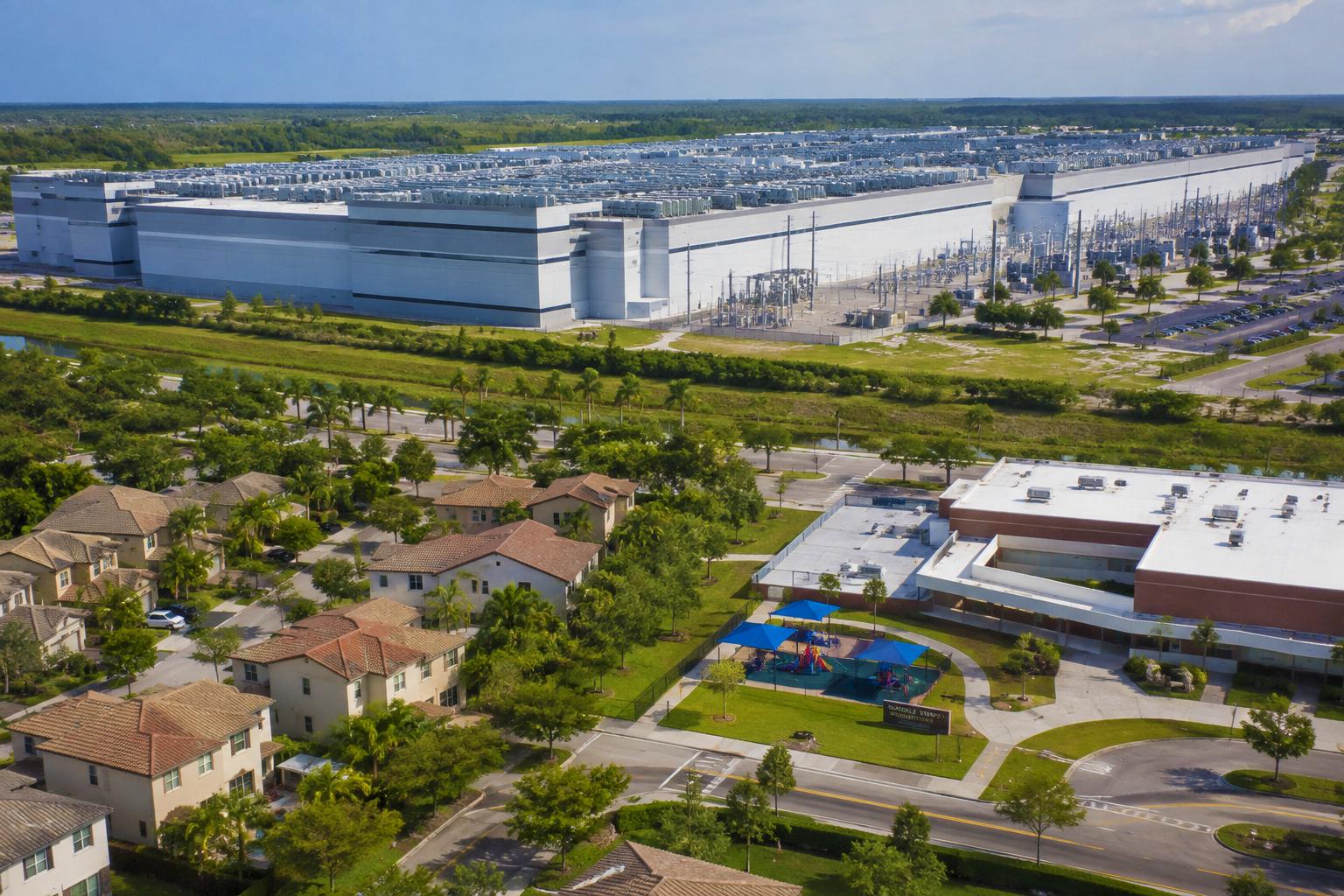
That is essentially the conversation that residents around Arden, Loxahatchee and western Palm Beach County have been having over Project Tango, a proposed hyperscale AI data center development near an established residential community and Saddle View Elementary School.
After months of opposition and a public hearing that lasted approximately 12 hours, Palm Beach County commissioners voted 5–1 on July 15 to deny the Project Tango application. For the residents who spent months attending meetings, studying proposals and raising concerns about noise, electricity, water, environmental impact and the scale of the development, the decision brought considerable relief.
But what happened in Loxahatchee is much bigger than one proposed development in Palm Beach County. The same question is beginning to surface around the world as our appetite for artificial intelligence creates an equally extraordinary appetite for the physical infrastructure needed to power it.
AI May Feel Virtual, but Its Infrastructure Is Very Real
Artificial intelligence can feel almost weightless. We type a question into ChatGPT and receive an answer within seconds. A physician can use AI to assist with medical analysis, a designer can generate an image, a business can process thousands of documents and a researcher can analyze amounts of information that would once have required days or weeks of work.
All of this happens so quickly that it is easy to forget what exists behind the screen.
AI requires enormous computing power, and that computing power has to physically exist somewhere. It requires buildings filled with servers, electrical infrastructure capable of delivering extraordinary amounts of power, cooling equipment to remove the heat those servers generate, backup systems, fiber connections, roads, substations and land.
As the demand for artificial intelligence has exploded, finding suitable places for this infrastructure has become a global challenge.
In Europe, data center developers are increasingly moving away from traditional technology hubs and major metropolitan areas and looking toward smaller cities and rural locations. According to data reported by Reuters, hyperscale data centers scheduled between 2026 and 2028 are being located an average of approximately 175 kilometers from major urban hubs. For facilities built or planned between 2022 and 2025, that average was only 46 kilometers.
The reasons are relatively easy to understand. Land outside major cities can be considerably cheaper, electricity may be more accessible or less expensive, and developers can sometimes avoid the enormous delays associated with connecting new facilities to already congested urban electrical grids.
From the perspective of a data center developer, the economics can make perfect sense. From the perspective of the family that already lives nearby, however, the calculation looks very different.
"Rural" Does Not Mean Nobody Lives There
One of the problems with describing these locations as rural is that the word can create an image of empty land stretching for miles, far removed from houses, schools and everyday life. In reality, rural does not mean unoccupied, and it certainly does not mean disposable.
This distinction is especially important in South Florida, where yesterday's rural land can quickly become today's growing residential community. Western Palm Beach County is a perfect example. Families have moved west seeking larger homes, open spaces, good schools and a different quality of life. Communities have been planned and built, children are being raised there, and people have invested significant portions of their savings into homes where they expect to spend years or even decades.
This is where the discussion about data centers cannot simply become a calculation involving acreage, megawatts, construction costs and economic development.
A planning map can identify an available parcel of land and calculate the distance to an electrical transmission line, but it cannot show what it feels like to sit in a backyard with your children a short distance away. It cannot fully calculate what a family believed it was buying when it chose that neighborhood, and it certainly cannot assign a simple dollar value to peace of mind.
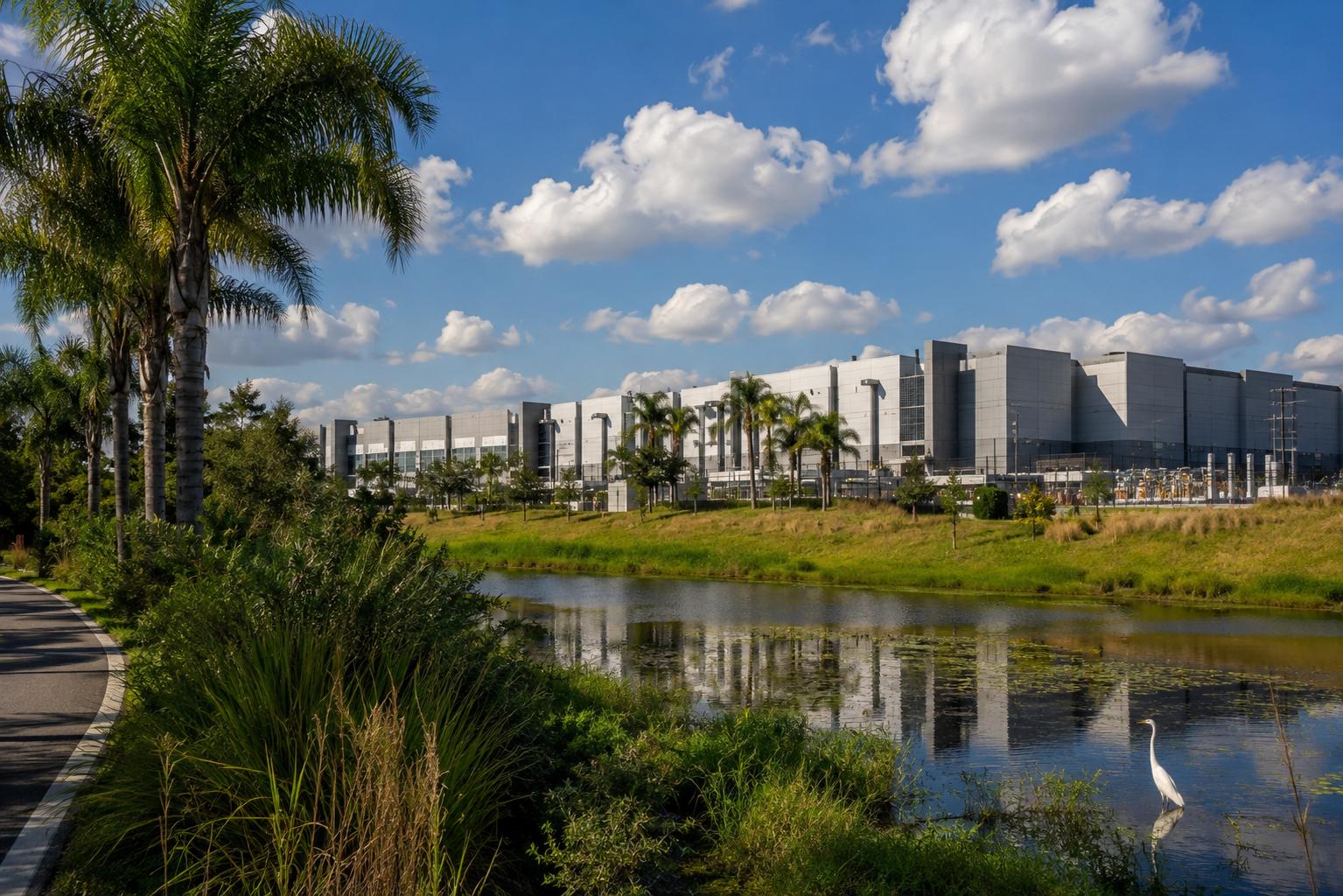
The Numbers Behind AI Infrastructure Are Enormous
The scale of Project Tango helps explain why communities are asking harder questions.
According to Palm Beach County zoning records, the overall Central Park Commerce Center site encompasses approximately 202 acres. The application involved changes to a master plan that would have allowed millions of square feet of development, including approximately 1.36 million square feet designated for data information processing uses under the revised plan.
Reports surrounding the proposal also placed the potential electrical demand at approximately 600 megawatts.
Numbers like that are difficult to understand without context. What is easier to understand is what is happening across the entire country.
According to research from Lawrence Berkeley National Laboratory and the U.S. Department of Energy, data centers consumed approximately 4.4% of total U.S. electricity in 2023. Updated federal research estimates that by 2030, data centers could account for approximately 11.8% of U.S. electricity consumption, with projections ranging from roughly 9.5% to 15.3% depending on how quickly the industry grows.
Think about the magnitude of that change. Within the space of only several years, facilities that most Americans rarely thought about could be consuming more than one-tenth of all electricity generated in the United States.
Globally, the trend is just as significant. The International Energy Agency expects electricity consumption from data centers to roughly double between 2025 and 2030, while electricity consumption specifically associated with AI-focused data centers could triple.
These statistics should not be interpreted to mean that data centers are inherently bad. They tell us something more important: modern data centers are becoming infrastructure on the scale of major industrial development, and infrastructure of that magnitude deserves planning of the same magnitude.
Electricity Is Only Part of the Concern
Power consumption attracts much of the attention surrounding data centers, but residents living nearby often have concerns that are far more immediate. They want to know what they will hear, see and experience every day.
Servers generate significant heat and that heat has to be continuously removed. Cooling systems, pumps, mechanical equipment and fans may operate around the clock because the computers inside these facilities do not shut down when the workday ends.
Noise therefore became one of the concerns surrounding Project Tango. The issue is not necessarily the dramatic sound someone might associate with standing beside an active construction site. Persistent mechanical noise can be different because it is repetitive and continuous, and certain low-frequency sounds can be particularly difficult for nearby residents to escape.
Water is another concern, although it is important to discuss it accurately. Cooling technologies vary considerably between data centers. Some designs can consume substantial quantities of water, while others use closed-loop systems, air cooling or technologies intended to significantly reduce water consumption. It would therefore be misleading to assign the water consumption of one facility to every data center.
What communities should expect, however, are precise answers about the facility being proposed next to them. How much water will this particular data center use? Where will that water come from? What happens during drought conditions? What cooling technology will be installed? How much electricity will the facility require when fully developed, and what additional grid infrastructure will be necessary to provide it?
The same standard should apply to noise. It is not enough to know that a project will comply with a technical standard on paper. Residents deserve to understand what they are likely to hear at their property lines, not only in the middle of the afternoon but late at night when their neighborhoods are otherwise quiet.
Those are not anti-technology questions. They are reasonable questions that any family should be entitled to ask before industrial-scale infrastructure is built near its home.
What Does the Community Receive in Return?
Supporters of large data centers understandably point toward investment, construction activity, tax revenue and economic development. Those benefits are real and deserve to be included in the discussion.
The investment involved in AI infrastructure can be enormous, and constructing these facilities can employ significant numbers of people. Data centers can contribute to local tax bases and create additional economic activity around their development.
There is, however, an important distinction between the workforce required to build a massive facility and the permanent workforce required to operate it.
Modern hyperscale data centers are highly automated, which is part of what makes them economically efficient. As a result, a facility can occupy a very large amount of land and consume extraordinary amounts of electricity without necessarily creating permanent employment proportional to its physical footprint.
There is nothing inherently wrong with that business model, but communities should understand the tradeoff clearly. When residents are being asked to accept the permanent presence of major industrial infrastructure, the permanent benefits should receive as much attention as the initial investment.
Instead of asking only how many billions of dollars might be invested in a project, perhaps the better question is what the surrounding community receives in exchange for hosting it.
We Need Data Centers, and That Is Part of the Reality
It would be easy to turn this discussion into an argument against artificial intelligence, but that would miss the point.
AI is already helping businesses operate more efficiently and is increasingly assisting physicians, researchers, engineers, educators, programmers, designers and countless other professionals. It is helping small businesses gain access to capabilities that once belonged only to much larger companies, and we are probably still at the beginning of understanding what this technology will eventually make possible.
We use AI ourselves, and like millions of other businesses and individuals, we benefit from the infrastructure behind it.
Every Google search, cloud application, streaming service, online transaction and AI conversation ultimately depends on physical computing infrastructure somewhere. Pretending that society can continue enjoying these services without building data centers would be unrealistic.
We need them. The more important question is where we build them.
The movement of European data centers away from major metropolitan areas may actually point toward part of the solution. If enormous AI facilities no longer need to sit immediately beside large cities, we have an opportunity to think more carefully about where this infrastructure belongs.
Cheaper land and available electricity cannot be the only criteria. Distance from established residential communities should matter, proximity to schools should matter, water availability and grid capacity should matter, environmental sensitivity should matter, existing land uses should matter, and above all, the people who already call an area home should matter.
A truly suitable rural location should be rural in more than name. There should be enough separation for industrial-scale infrastructure to coexist with the surrounding region without asking families to absorb consequences that could reasonably have been avoided through better planning.
Project Tango Was Also a Lesson in Community
There is another part of the Project Tango story that deserves attention, because it is easy for ordinary residents to feel powerless when facing development backed by enormous amounts of money and one of the world's fastest-growing industries.
People participated.
Residents attended meetings, parents and teachers spoke, community members organized, and people studied technical documents they would probably never have imagined needing to understand. They asked questions about zoning, utilities, environmental impacts, electricity, noise and the future of the place they call home.
More than 80 people reportedly signed up to speak during the final July 15 hearing, which lasted approximately 12 hours. At the end of that process, Palm Beach County commissioners voted 5–1 to deny the application before them.
Regardless of someone's broader opinion about data centers, there is something encouraging about that process. Technological progress can sometimes feel inevitable, and a multibillion-dollar industry can feel far too large for an individual homeowner to question. Yet communities are not empty spaces between parcels on a development map. They are people, and those people still deserve a meaningful voice in deciding what their neighborhoods become.
The Project Tango application was denied without prejudice, which means a revised proposal could potentially return. Previously approved development rights also remain associated with the property, so the larger conversation surrounding this site may not be finished.
Neither is the larger conversation facing South Florida.
What If Tomorrow It Is Your Neighborhood?
Perhaps the easiest way to understand why residents care so deeply about this issue is to remove the words "data center" entirely and simply imagine yourself in their position.
Imagine waking up tomorrow and discovering that the vacant land beyond your neighborhood is being considered for one of the largest industrial computing facilities you have ever seen. Your child's school is nearby. You begin wondering what the mechanical equipment will sound like from your backyard at night, what years of construction might mean for local roads, whether new electrical infrastructure will be required and whether the home you worked for, saved for and planned your future around will feel the same five or ten years from now.
Then imagine being told that this is the price of progress.
Perhaps progress requires the facility, but progress does not automatically require that particular location. There is an enormous difference between opposing technological development and asking that industrial-scale infrastructure be located responsibly.
That distinction may become one of the most important land-use questions of the AI era.
Technology Should Improve Human Life, Not Ask It to Move Aside
Artificial intelligence is advancing at a speed few technologies in history have matched, and the infrastructure required to support it will inevitably grow. There will be more data centers, many of them will become larger, and they will require extraordinary amounts of electricity, sophisticated cooling systems and enormous investment.
We should welcome innovation, and we should build the infrastructure necessary to support the future. At the same time, we should be wise enough to remember why technological progress matters in the first place: it is supposed to improve human life.
Our children still need schools where parents feel comfortable sending them every morning. Families still deserve quiet nights. Communities still need reliable water and electricity, and people who spend decades working to buy a home deserve to know that the character of their neighborhood will not simply be treated as an inconvenience standing in the way of the next technological boom.
There is enough ingenuity behind artificial intelligence to solve extraordinarily complicated problems, and we should expect some of that same ingenuity to be applied to the question of where and how we build the infrastructure that powers it. Finding appropriate locations may cost more. It may require longer transmission connections, additional power infrastructure, better cooling technologies, greater setbacks from homes and schools, or simply more thoughtful planning. Those costs should be part of building the future responsibly, rather than costs transferred to the families who happened to live there first.
Because computing capacity can be expanded, servers can be replaced and technology will continue evolving. A family's home, however, is not a server rack. A neighborhood is not simply unused capacity on a planning map, and a child's school is not an obstacle to infrastructure development.
AI will undoubtedly be part of our future, and so will the data centers that make it possible. We do not have to choose between technological progress and quality of life. We should be capable of protecting both.
Perhaps that is the real lesson from Loxahatchee. The question is not whether we want the future to arrive.
It is whether we are thoughtful enough to decide where we build it.
Sources & References
- Palm Beach County Planning, Zoning & Building – Project Tango Official Records: Official Palm Beach County project page containing zoning information, applications, plans, staff materials and public records associated with the proposed Project Tango development in Loxahatchee.
Palm Beach County – Project Tango - Palm Beach County Project Tango Zoning Application & Site Information: Primary county documentation supporting details regarding the Central Park Commerce Center proposal, including the approximately 202-acre development area, proposed land uses and data-information-processing component.
Palm Beach County Planning, Zoning & Building - WFLX / FOX 29 – Palm Beach County Denies Project Tango Expansion: Local reporting on the July 15, 2026 Palm Beach County Commission hearing and 5–1 vote denying the Project Tango application without prejudice. The report also covers community opposition, the lengthy public hearing and the status of development already approved for the property.
WFLX – Palm Beach County denies Project Tango expansion - Reuters – European AI Data Centers Move Toward Rural Locations: August 19, 2026 reporting on European hyperscale data-center developers increasingly moving projects away from major metropolitan areas to obtain cheaper land and energy and avoid congested urban electricity grids. Reuters reports that hyperscale projects scheduled for 2026–2028 are located an average of approximately 175 kilometers from major urban hubs, compared with approximately 46 kilometers for the 2022–2025 period.
Reuters – AI data centers seek cheaper, quicker energy and land - Lawrence Berkeley National Laboratory – United States Data Center Energy Usage Report, 2025 Update: Federal laboratory research examining current and projected U.S. data-center electricity demand. This is the principal technical source behind the article's discussion of rapidly increasing electricity consumption and the estimate that data centers could represent approximately 11.8% of U.S. electricity use by 2030, with scenarios ranging from roughly 9.5% to 15.3%.
Lawrence Berkeley National Laboratory – United States Data Center Energy Usage Report - U.S. Department of Energy – Data Center Electricity Demand Analysis: Department of Energy overview of the growth in electricity consumption associated with U.S. data centers. This source supports the broader discussion of data centers' increasing impact on the American electrical grid and references the Lawrence Berkeley National Laboratory research commissioned by DOE.
U.S. Department of Energy – Evaluating increased electricity demand from data centers - International Energy Agency – Energy and AI: International analysis of the relationship between artificial intelligence, data centers and global electricity demand. The IEA projects substantial growth in data-center electricity consumption through 2030 and particularly rapid growth from AI-optimized data centers. This supports the article's point that AI infrastructure requirements are becoming a significant global energy issue rather than simply a South Florida land-use issue.
International Energy Agency – Energy and AI - International Energy Agency – Energy and AI, Executive Summary: Condensed IEA findings regarding global data-center electricity demand, AI-specific computing growth, energy infrastructure and the expected expansion of data centers through the end of the decade.
International Energy Agency – Energy and AI Executive Summary
